Love in a Complex World
If you are in a queer relationship, you already know that love is shaped by the world around you. You and your partner are not just navigating communication, conflict, intimacy, shared responsibilities, and the occasional heated disagreement about whose turn it is to deal with the laundry. You may also be navigating family reactions, social assumptions, discrimination, invisibility, safety concerns, and the emotional wear and tear of living in a world that is not always designed with your relationship in mind.
Queer couples counselling can help you make sense of what belongs to your relationship and what has been pushed into your relationship by the outside world. Sometimes the problem is not that you and your partner are doing love “wrong.” Sometimes the problem is that you are trying to stay connected while carrying stress that many heterosexual couples do not have to carry in the same way.
Research on minority stress has shown that stigma, discrimination, anticipated rejection, concealment, and internalized shame can affect mental health and relationship functioning for sexual minority people and couples (Meyer, 2003; Whitton et al., 2024). The American Psychological Association also emphasizes that affirmative care should recognize both the diversity of sexual minority people and the stressors they encounter in social systems that can be invalidating or hostile (American Psychological Association, 2021).
This is where queer couples counselling, LGBTQ couples therapy, and affirmative therapy can be deeply helpful. Therapy gives you a place to slow things down, understand what is happening, and stop blaming each other for stress that may not have started between both of you.
External Pressures Impact Relationships

Maybe one of you is fully out, and the other is not. Maybe your family loves your partner. Maybe they tolerate your partner in the same tone people use when discussing a mysterious stain. Maybe you are parenting and dealing with forms, schools, or systems that still act surprised by queer families. Maybe one of you has experienced religious trauma, bullying, rejection, or medical invalidation. Maybe you are tired of deciding when to explain yourselves and when to conserve your precious human energy.
Those pressures do not stay politely outside the relationship. They come home with you. They shape how safe you feel, how reactive you get, how easily you withdraw, and how much bandwidth you have left for openness and vulnerability. Studies on same sex couples have found that minority stress is associated with poorer relationship quality and greater distress (Otis et al., 2006; Cao et al., 2017). More recent research also notes that minority stress can affect romantic relationship functioning across sexual minority adults more broadly, including relationships that may not fit narrow assumptions about who queer people partner with (Whitton et al., 2024).
So, if you have found yourselves fighting more, shutting down faster, or feeling more fragile as a couple under external pressure, that does not automatically mean your relationship is weak. It may mean your relationship is responding to real stress.
Unique Challenges in Queer Relationships
Like any couple, you and your partner have your own personalities, attachment styles, habits, and sore spots. But queer relationships often carry additional layers that shape identity and relationship dynamics in ways therapy needs to understand.
Identity, Family Systems, and Minority Stress
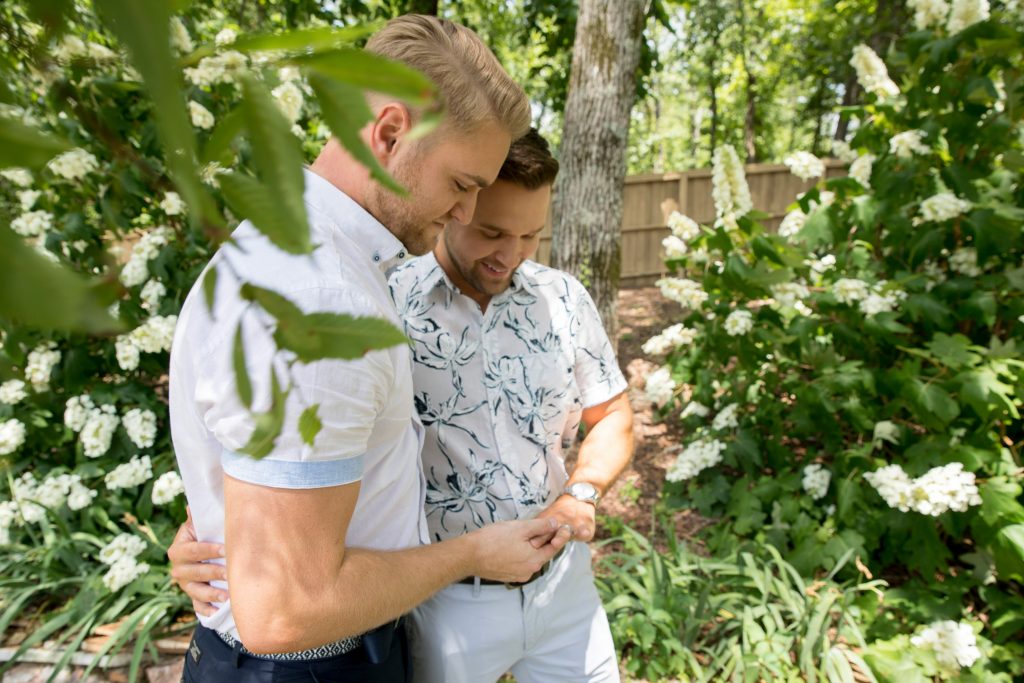
You and your partner may not have had the same journey into your identities. One of you may have been out for years. One of you may still be sorting things out. One of you may come from a deeply affirming family. The other may come from a family system where acceptance is conditional, performative, or absent altogether. One of you may have had the privilege of relative safety. The other may have spent years bracing for rejection.
All of that can show up in communication in queer relationships.
Maybe one of you wants more visibility, and the other values privacy because privacy has historically felt safer. Maybe one of you wants family closeness, and the other feels flooded by even the thought of attending a holiday dinner. Maybe conflict gets tangled up with old shame, fear, grief, or a reflex to protect yourself before you can be hurt.
Minority stress theory helps explain why this happens. Meyer (2003) described how social stigma can create chronic stress through experiences such as prejudice, expectations of rejection, internalized stigma, and pressure to conceal identity. The APA’s guidelines for working with sexual minority persons highlight the importance of understanding the cumulative impact of these experiences and providing care that is explicitly affirmative rather than neutral in name only (American Psychological Association, 2021). Because frankly, if you have had to defend your humanity at Thanksgiving, “neutral” may not feel especially therapeutic.
Family systems also matter. Research has shown that family acceptance and rejection are strongly linked to emotional well-being for LGBTQ people (Ryan et al., 2009). Even when you are an adult, family responses can shape how safe, lovable, or settled you feel inside a close relationship. Queer couples counselling can help you and your partner understand how those histories are affecting your present dynamics, instead of just getting stuck in the same painful loop.
Creating Safety in Therapy
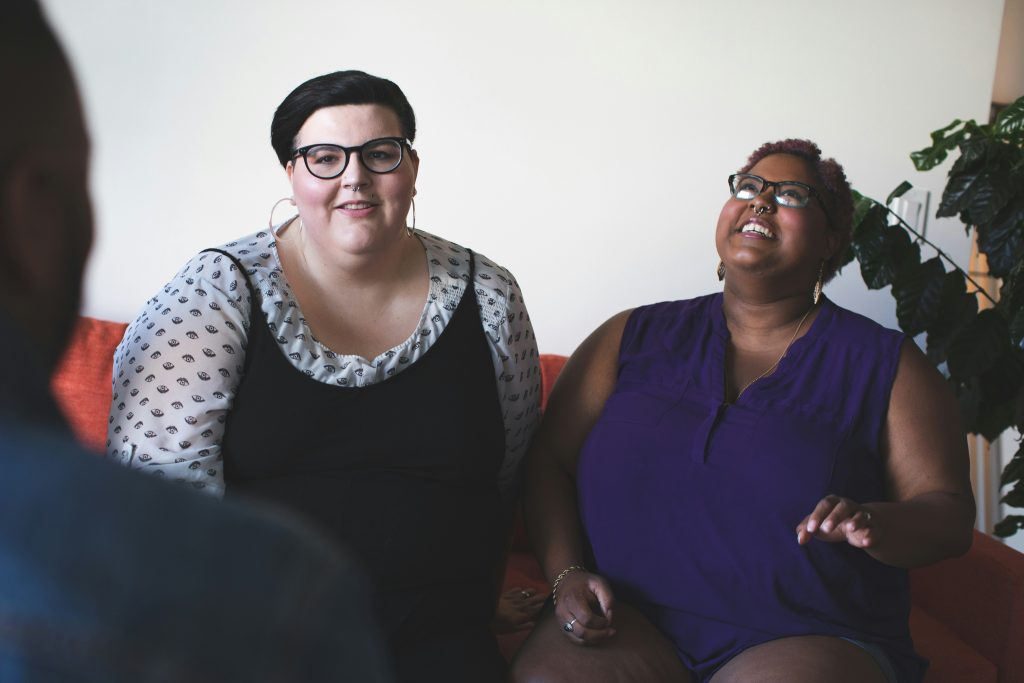
Before you can work on conflict resolution for queer couples, problem-solving in relationships, or a deeper emotional connection, you need to feel safe enough to be honest.
Affirming Care Without Explanation or Judgment
You should not have to spend your therapy session educating your therapist on the basics of queer life. You should not have to wonder whether your therapist is quietly pathologizing your identity, your relationship, or your family structure. You should not have to brace for awkwardness every time you mention pronouns, outness, chosen family, or the fact that your relationship does not fit a default script.
That is why LGBTQ affirmative therapy matters.
Affirmative therapy means your therapist understands that queer identities are normal variations of human experience and that the real clinical task is not to “fix” queerness but to support wellbeing, resilience, and relational health in the context of real-world social pressures (American Psychological Association, 2021). Research has also found that affirmative practice is associated with a stronger therapeutic relationship, which in turn is linked to better well-being among lesbian, gay, bisexual, and queer clients (Alessi et al., 2019). In plain terms, when you feel understood instead of scrutinized, therapy tends to work better.
Emotional safety in therapy is not a luxury. It is the foundation. It allows you to say the hard thing. It allows your partner to hear it without immediately going into defence mode. It allows both of you to explore identity and relationship dynamics with more curiosity and less shame.
Navigating External Stress Together

When the outside world is stressful, it is easy for you and your partner to accidentally turn on each other rather than toward each other. Therapy can help you become allies again.
Family Boundaries and Parenting in a Queer Relationship
Boundaries are one of the biggest areas where external stress enters queer relationships. You may be trying to decide what you will tolerate from family, who gets access to your children, how to respond to invasive questions, or whether certain holidays are worth the emotional cost. These are not small issues. They affect safety, trust, and your sense of being protected by one another.
Queer couples counselling can help you talk through these questions with more clarity and less panic. Instead of getting trapped in a pattern of one partner feeling “too sensitive” and the other feeling “too avoidant,” therapy can help you understand what each of you is protecting and what values you want your boundaries to reflect.
If you are parenting, or planning to parent, you may also be dealing with stress around schools, legal systems, fertility decisions, donor conversations, adoption pathways, or social assumptions about what a family is supposed to look like. The research does not support the old stereotype that queer families are somehow less healthy for children. A systematic review and meta-analysis found that outcomes in sexual minority parent families were generally comparable to those in heterosexual parent families, with some positive outcomes as well (Zhang et al., 2023). The challenge is not your capacity to love and parent well. The challenge is often the systems around you.
LGBT family counselling, lesbian family therapy, same sex premarital counselling, and LGBT premarital counselling can all support these conversations before they become chronic pain points. It is much nicer to discuss values and expectations in a calm office than in a car after an ignorant baby shower comment from an uncle named John.
Shame and Safety for LGBTQ+ Couples

Shame has a sneaky way of disguising itself as irritation, distance, over-explaining, defensiveness, emotional shutdown, or relentless self-criticism. You may think you are arguing about sex, in-laws, visibility, commitment, or logistics when underneath it all is fear. Fear of being rejected. Fear of being exposed. Fear of being too much. Fear of needing too much.
If one or both of you are carrying that kind of shame, queer couples counselling can help you name it without drowning in it.
This is especially important for transgender and nonbinary people and their partners, who may be navigating heightened safety concerns, social scrutiny, or transition-related stress. Research suggests that minority stress has a significant impact on mental health, while supportive, high-quality romantic relationships can also buffer some of that stress (Pepping et al., 2024). So, your relationship can be a place where pain shows up, yes, but it can also be a place of repair.
That is one of the most hopeful things therapy can offer. It can help you stop treating each other like the enemy when the real issue may be shame, fear, and accumulated stress.
Supporting Different Relationship Structures

Your relationship deserves support that fits your actual life, not support that squeezes you into a narrow template.
Monogamy, Non-Monogamy, and Transition Support
Some queer couples choose to be monogamous, while others embrace consensual non-monogamy. Many are exploring which relationship structure feels aligned with their values. Some couples are navigating the complexities of bisexual counseling because one partner feels unseen or misunderstood. Others are supporting each other through a gender transition. Some are coming out later in life and discovering new meanings of intimacy, identity, and partnership.
Good queer affirmative therapy does not treat all of these paths as problems. It treats them as realities that deserve thoughtful, respectful support.
Research on consensual non-monogamy suggests that clinicians need to approach relationship diversity without defaulting to pathologizing assumptions (Cassidy & Wong, 2018; Scoats, 2022). That means the goal is not to push you toward or away from a particular structure. The goal is to help you build honesty, clarity, consent, accountability, and emotional care within the structure you are choosing.
If one or both of you are also navigating transition-related changes, therapy can support grief, celebration, uncertainty, attraction shifts, family reactions, and communication needs without forcing a rushed narrative. You do not need to have everything figured out before asking for help. That would be wildly inconvenient, and also not how being human works.
Building Strength Through Resilience

You are not only the product of stress. You are also the product of adaptation, love, creativity, courage, and survival.
Turning Shared Challenges into Deeper Connection
One of the beautiful things about many LGBTQ relationships is the intentionality they often develop. You may have had to think more carefully about values, chosen family, safety, visibility, commitment, and what kind of life you want to build together. That intentionality can become a real strength.
Couples therapy in general has a strong evidence base, and contemporary couple therapy research supports approaches that help partners improve emotional responsiveness, communication, and connection (Lebow et al., 2022). Research on intimacy also shows that self-disclosure, responsiveness, and emotional openness are central to feeling close in a relationship (Laurenceau et al., 2021). In other words, healing often happens when you can be more honest about what hurts and trust that your partner will meet you there with care.
Queer couples counselling can help you get back on the same side of the problem. It can help you see that the argument is not always “You versus me.” Sometimes it is “Us versus the stress, the shame, the family pressure, the old wounds, and the nonsense.”
And when you start from there, something shifts. The same challenges that once made you feel divided can become places where you build deeper understanding, more skilful repair, and a stronger sense of team.
Inclusive and Evidence-Based Care

Warmth matters in therapy. So does competence. Ideally, you get both.
Trauma-Informed Approaches Tailored to You
Inclusive care should be queer-affirming, trauma-informed, and responsive to your specific relationship. That might include emotionally focused work, attachment-based work, systems approaches, communication skills, or other evidence-based couple therapy methods. The point is not to force you into a formula. The point is to help you and your partner feel safer, more connected, and better able to navigate the pressures around you.
The APA’s guidance for psychological practice with sexual minority persons stresses that clinicians should understand the diversity within LGBTQ lives and the role that stigma, oppression, and resilience all play in mental health and relational wellbeing (American Psychological Association, 2021). Good therapy should reflect that. It should not flatten your story. It should not make assumptions. It should not require you to translate your life into a simpler version that makes other people comfortable.
Support at Love This Therapy

If you and your partner are carrying external stress, feeling disconnected, or simply wanting stronger tools for communication in queer relationships, support can help. You do not need to wait until things are falling apart. Therapy can be useful in a crisis, but it’s also useful when you want to protect something good and help it grow.
Queer Affirming Counselling in Person or Online
At Love This Therapy, queer-affirming counselling means you do not have to shrink, overexplain, or brace yourself to be understood. We offer support for queer couples counselling, LGBTQ couples therapy, same sex couples counselling, gay couples counselling, LGBTQ relationship counselling, and the many forms that 2SLGBTQIA relationships can take.
Whether you are looking for therapy for gay couples, marriage counselling for gay couples, same sex marriage counselling, or support around family stress, identity and relationship dynamics, or emotional safety in therapy, your relationship deserves care that is both affirming and clinically grounded.
Build Connection, Peace, and a Shared Future
You and your partner are allowed to want more than survival. You are allowed to want peace. You are allowed to want closeness. You are allowed to want a relationship that feels like a refuge rather than another place where you have to armour up.
Queer couples counselling can help you understand what is happening, communicate more clearly, repair more effectively, and face external challenges as a team. Not because the world suddenly becomes simple, but because you do not have to navigate its complexity alone.
Love is about managing two nervous systems, two personal histories, different coping strategies, and even a shared grocery list. It’s important to have support that makes everything feel a bit more manageable, more connected, and ultimately more human. You deserve that kind of support.
Reach out to us today at 604-229-4887 or info@lovethistherapy.com. We are here to help.
References
Alessi, E. J., Dillon, F. R., Kim, H. M., Meyer, I. H., Nadal, K. L., DeBlaere, C., Kuper, L. E., Ching, T. H. W., & Spivey, L. A. (2019). The therapeutic relationship mediates the association between affirmative practice and psychological well being among lesbian, gay, bisexual, and queer clients. Psychotherapy, 56(2), 229 to 240.
American Psychological Association. (2021). Guidelines for psychological practice with sexual minority persons.
Cao, H., Zhou, N., Fine, M., Liang, Y., Li, J., Mills Koonce, R., & Fang, X. (2017). Sexual minority stress and same sex relationship well being: A meta analysis of research prior to the US nationwide legalization of same sex marriage. Journal of Marriage and Family, 79(5), 1258 to 1277.
Cassidy, T., & Wong, G. (2018). Consensually non monogamous relationships and implications for counselling. Canadian Journal of Counselling and Psychotherapy, 52(3), 248 to 272.
Laurenceau, J. P., Barrett, L. F., & Pietromonaco, P. R. (2021). Intimacy as an interpersonal process: The importance of self disclosure, partner disclosure, and perceived partner responsiveness. Journal of Social and Personal Relationships, 38(7), 2126 to 2144.
Lebow, J., Snyder, D. K., & Baucom, D. H. (2022). Couple therapy in the 2020s: Current status and emerging developments. Family Process, 61(4), 1421 to 1438.
Meyer, I. H. (2003). Prejudice, social stress, and mental health in lesbian, gay, and bisexual populations: Conceptual issues and research evidence. Psychological Bulletin, 129(5), 674 to 697.
Otis, M. D., Rostosky, S. S., Riggle, E. D. B., & Hamrin, R. (2006). Stress and relationship quality in same sex couples. Journal of Social and Personal Relationships, 23(1), 81 to 99.
Pepping, C. A., Lyons, A., McNair, R., & colleagues. (2024). Romantic relationships buffer minority stress in transgender and nonbinary people. Journal of Affective Disorders, 367, 350 to 358.
Ryan, C., Huebner, D., Diaz, R. M., & Sanchez, J. (2009). Family rejection as a predictor of negative health outcomes in white and Latino lesbian, gay, and bisexual young adults. Pediatrics, 123(1), 346 to 352.
Scoats, R. (2022). What do we know about consensual non monogamy? Current Opinion in Psychology, 48, Article 101460.
Whitton, S. W., Kuryluk, A. D., & Newcomb, M. E. (2024). Minority stress and romantic relationship functioning among sexual minority adults: A review and directions for future research. Current Opinion in Psychology, 57, Article 101820.
Zhang, Y., Li, X., Zheng, Y., Wilson, A., & colleagues. (2023). Family outcome disparities between sexual minority and heterosexual families: A systematic review and meta analysis. BMJ Global Health, 8(3), e010556.